
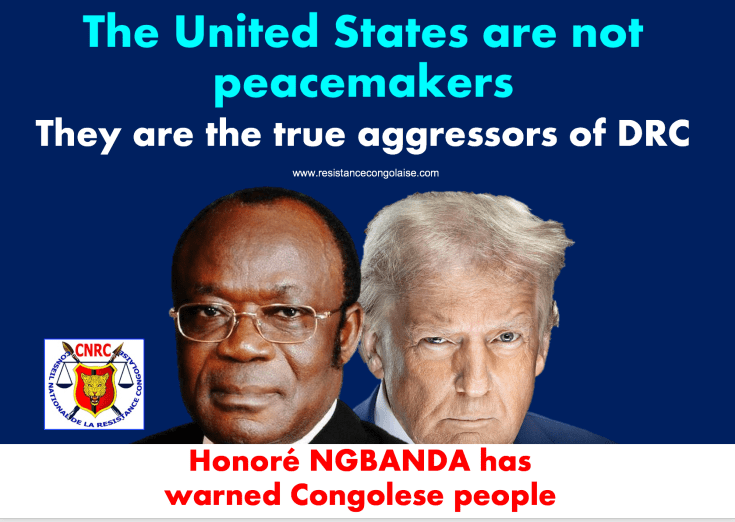
The United States are not peacemakers: They are the true aggressors of DRC, acting through proxy states
Félix Tshisekedi is acting under external orders
Honoré Ngbanda had already provided indisputable evidence revealing the U.S. plan of aggression against the DRC through Rwanda and Uganda
Excerpt from an interview with Mr. Honoré Ngbanda granted exclusively to the Belgian online magazine Baro Tendances, published on Friday, November 27, 2015.
Mr. HONORÉ NGBANDA NZAMBO KO ATUMBA said :
“I refer you to my last two books:Organized Crimes in Central Africa: Revelations on the Rwandan and Western Networks (2004), and The Strategy of Chaos and Lies: Bluff Poker in the Great Lakes Region, co-written with Patrick Mbeko in 2014.
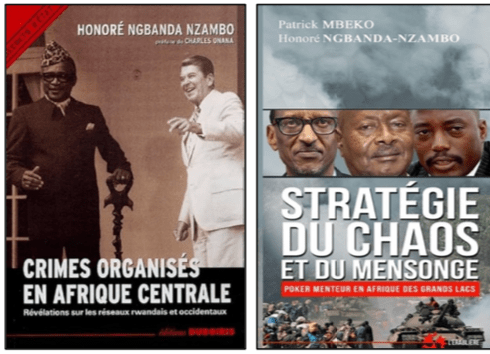
In these two works, I demonstrate — with undeniable evidence — that the true masterminds behind the 1996 aggression against Zaire were first and foremost the United States of America, specifically under the administration of Bill Clinton.
After the fall of the Berlin Wall and the end of the Cold War, the United States abandoned its previous restraint and decided to push Europe — particularly France — out of areas considered strategic, targeting African regions that had long been viewed as France’s “exclusive domain.”
To illustrate, on page 195 of Organized Crimes in Central Africa, I quoted several statements from American officials, including one from Under-Secretary of State George Moose, who declared in a 1993 address before the U.S. Senate:
“We must ensure our access to Africa’s immense natural resources — a continent that contains 78% of the world’s chrome reserves, 89% of its platinum, and 59% of its cobalt.”
Two years later, in 1995, during a visit to Dakar (a symbolic location), U.S. Secretary of Commerce Ron Brown was even more explicit and confrontational, stating:
“Americans will keep Africa’s traditional partners — starting with France — on the defensive. We will no longer leave Africa to the Europeans.”
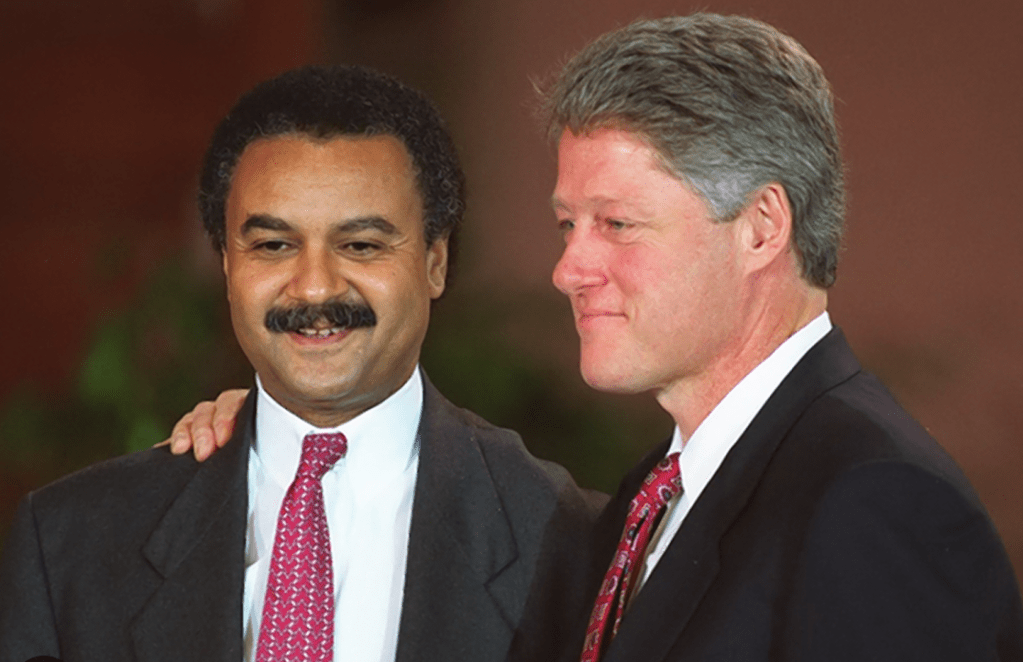
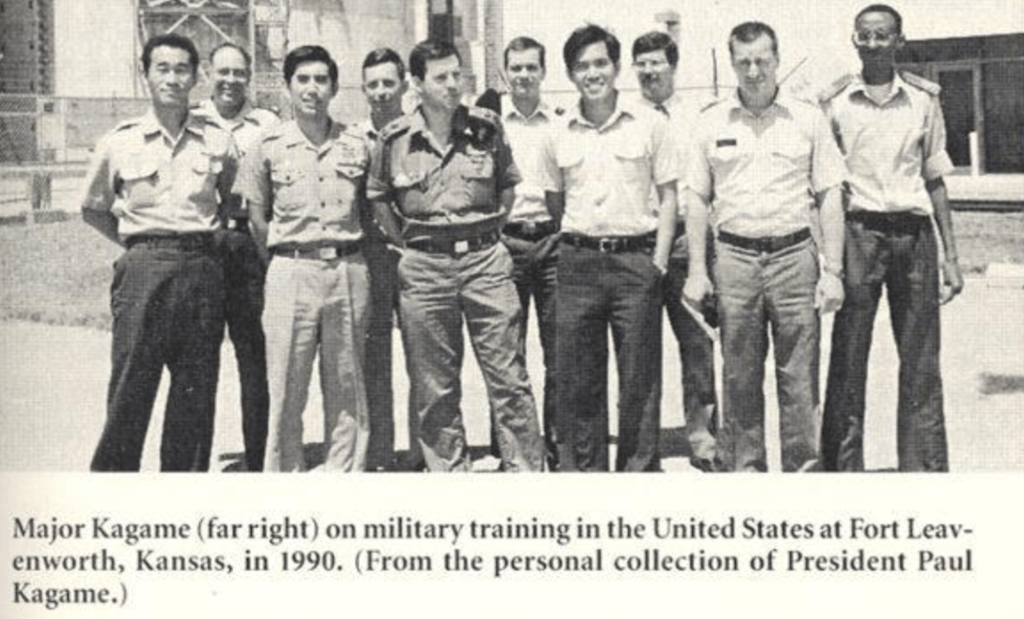
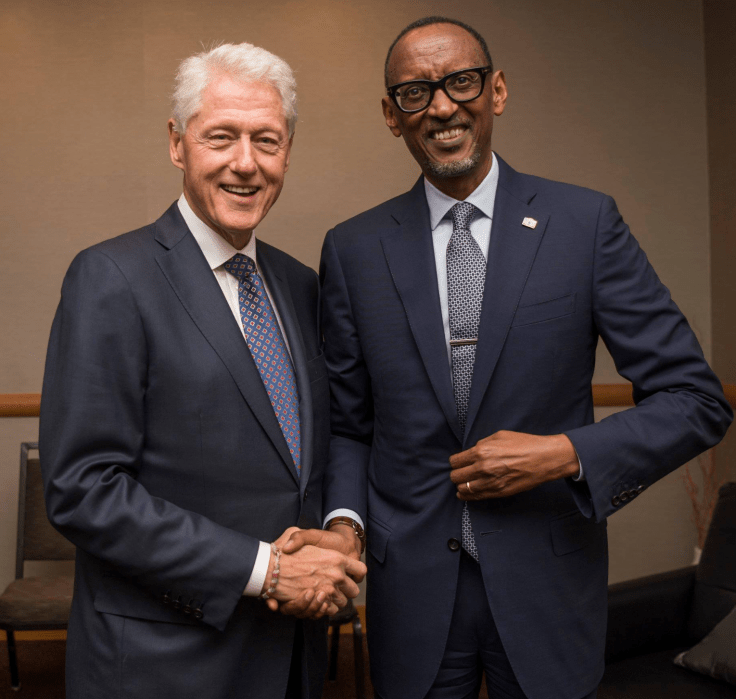
This, Mr. Roger Jadot, marked the geopolitical turning point that gave birth to the Machiavellian plan to destabilize the entire Great Lakes region, with Zaire as its principal target. During the same period, Museveni and Kagame were invited by Bill Clinton to Arkansas, his political home base (photographs exist). It was there that they were prepared and equipped to carry out the “job”: first, to remove Rwandan President Juvénal Habyarimana — France’s ally and Mobutu’s regional partner, and also the weakest link. But Rwanda was merely a stepping stone. The ultimate objective was Zaire (today the Democratic Republic of Congo), coveted for its immense natural wealth by the United States and its Anglo-Saxon allies. As I have repeatedly stated, this invasion of Zaire was financed by Anglo-Saxon multinational corporations. The clearest example is American Mineral Fields Inc. (AMFI), owned by Jean-Raymond Boulle, a personal friend of President and Mrs. Clinton.
Boulle financed the invasion with 50 million U.S. dollars and provided a private jet for LD Kabila’s travels during the war. AMFI acted like a giant octopus, with tentacles operating in the most strategic sectors during the aggression and occupation. AMFI also has a scientific subsidiary that collaborates with NASA, called NASA/BETCHEL.
During the 1996–1997 invasion of Zaire, this powerful branch provided Rwandan and Ugandan forces with satellite reconnaissance images of Zairian troop positions and even the top-secret communications frequencies of the Zairian Armed Forces. After the invasion, this same subsidiary produced infrared maps of major mineral deposits in the DRC, designed to
guide American companies in the scramble to seize and partition the “useful territories” of
Congo.
AMFI then created a special branch in the DRC — ADASTRA/AMFI — tasked specifically
with managing conflict minerals in the Kivu region. As you can see, Rwanda and Uganda
have acted merely as proxies for Western powers — the true architects hiding behind the
façade of the so-called international community.
What is not openly told to the Congolese people is that the Anglo-Saxon powers struck a
bargain with the Rwandan and Ugandan proxies: the former would support the latter’s

hegemonic Tutsi expansion in the region, in exchange for unrestricted access to the Congo’s natural resources. This is why the international community, led by the UN, discreetly and cynically turns a blind eye to the genocidal crimes and large-scale plundering committed by Kagame, “Kabila,” and Museveni in Rwanda and the DRC — crimes they continue to commit today with total impunity.
I am not naïve. I understand the magnitude of the struggle ahead, because this conspiracy is global. But I am confident in my mission, because in the end, the Congolese people will force the West to reconsider its methods and its position in the DRC. And developments are already moving in that direction. I will say no more.” (…)
End of attributed statement
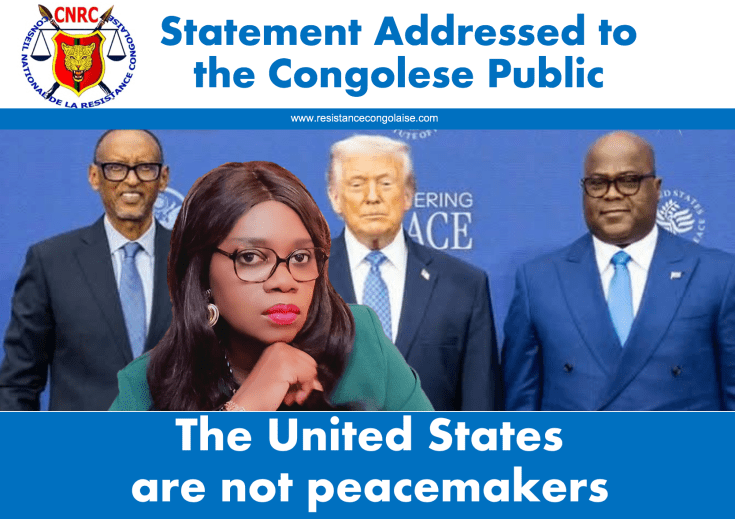
Statement Addressed to the Congolese Public
In light of the above-referenced statements and analyses attributed to Mr. Honoré Ngbanda over an extended period, the following positions are expressed:
- Certain international agreements, including those referred to as the “Washington Agreements,” are viewed by the authors of this document as facilitating resource exploitation and contributing to a climate of impunity for serious violations of international law in the region.
- The role of the United States is characterized not as neutral mediation but as that of an interested external actor, with regional governments identified as implementing partners.
- The signing of recent agreements by the current President of the Democratic Republic of the Congo is interpreted by the authors as inconsistent with national sovereignty and as contributing to territorial fragmentation.
- The Congolese population is urged to maintain vigilance and critical awareness regarding national governance and external influence.
- Effective national defense and political resistance are understood to require leadership and representation aligned with the interests of the Congolese people.
It is further asserted that current governance structures in the Democratic Republic of the Congo include individuals whose actions may conflict with national interests.
- The Congolese people are therefore encouraged to exercise heightened scrutiny toward political actors—domestic or foreign—who may seek to distort historical narratives to obscure responsibility for past or ongoing violations.
- The CNRC calls upon the Congolese people to engage in lawful, organized, and collective efforts aimed at the restoration of sovereignty and the protection of the Democratic Republic of the Congo.
Paris,08 January 2026
For the National Council of the Congolese Resistance (CNRC)
Candide OKEKE
Head of Strategic Steering CNRC
(Associate of Mr. Honoré Ngbanda, 2005–2021)

 100% NGBANDISTES
Laisser un commentaire